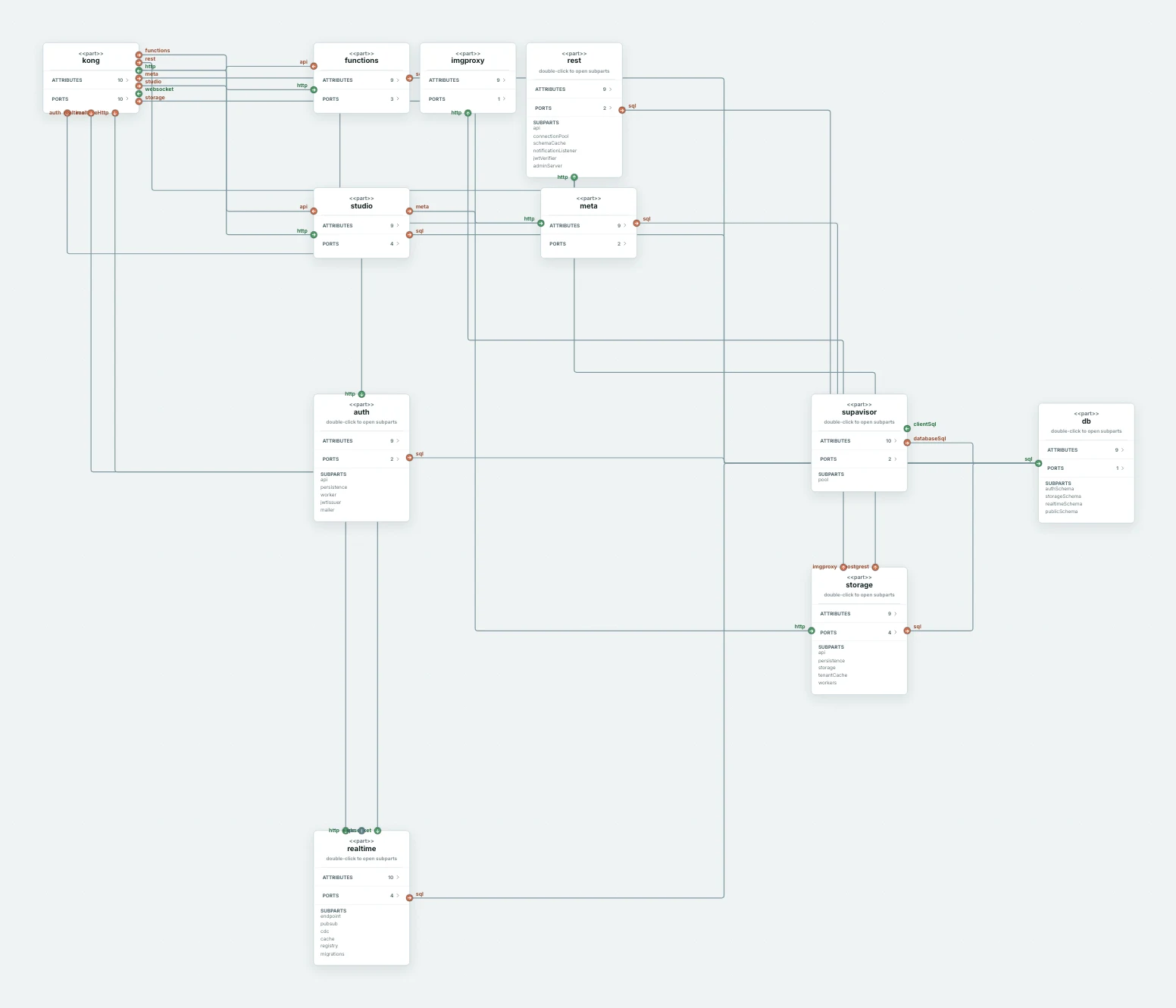








Uber built Apache Hudi to solve a familiar data problem: Records change after they land.
A trip gets corrected after it ends.
A chargeback arrives weeks later.
Rebuilding a large table to fix a handful of rows is wasteful.
Our free idempotent backfill skill applies some of Hudi's design ideas to late-arriving corrections in data you've already published. Give the current URL to your coding agent and simply tell it to install the skill to try it out.
What we borrowed from Hudi
Uber's lakehouse write-up describes a backfill that reads a fixed snapshot and overwrites only the affected partitions. It does not move the incremental writer's checkpoint. That separation prevents an old repair from disrupting the live pipeline.
Our skill turns a few of its core practices into a six-step, database-independent checklist:
Fix the source snapshot.
Name the partitions, business key, and newest-wins order.
Build each partition twice.
Compare the logical rows.
Stop for approval.
Replace and verify one partition at a time.
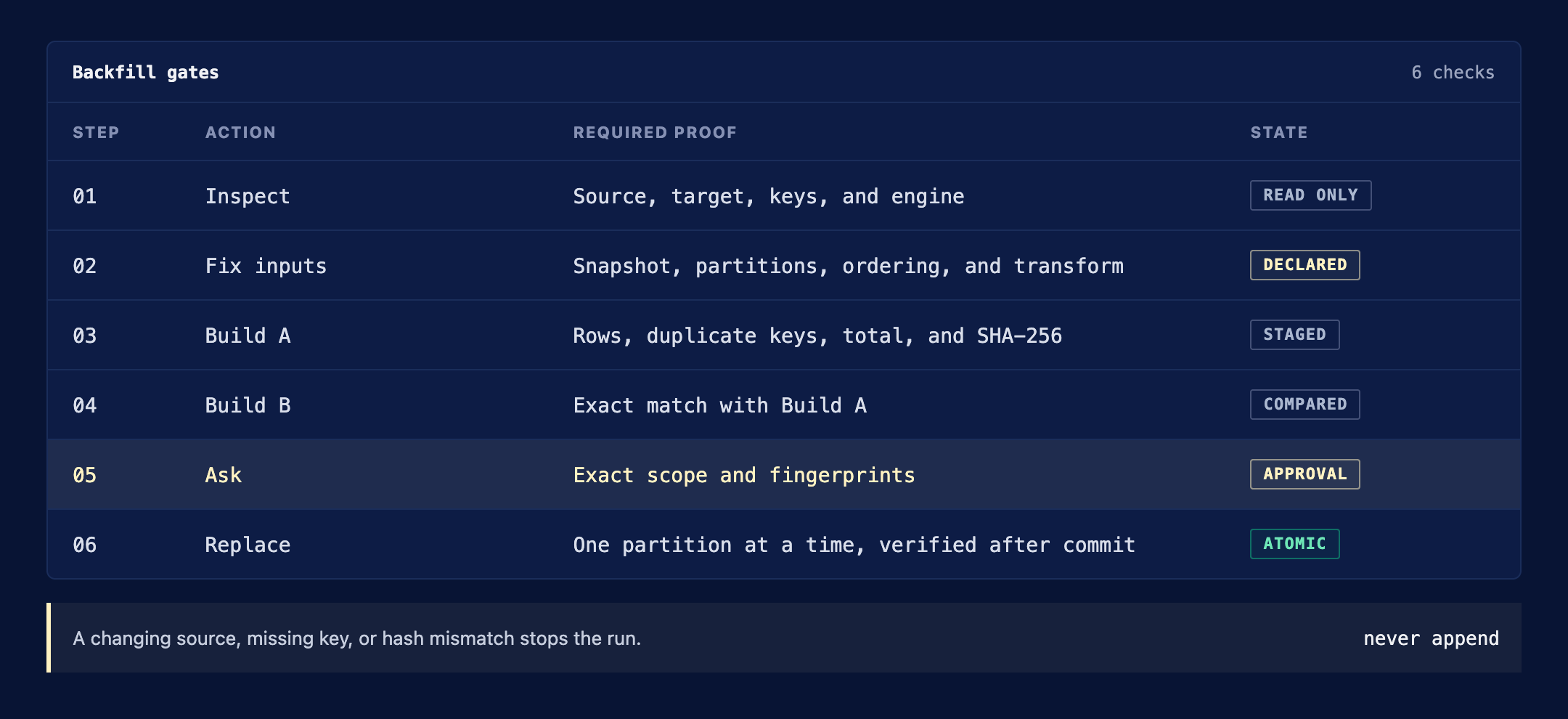
The skill is short on purpose so the agent can use the database's own atomic replacement operation.
Why build it twice
Maxime Beauchemin's essay on functional data engineering gives us a clear rule. Treat a partition as the complete output of a function. The same source snapshot and transform should return the same rows every time.