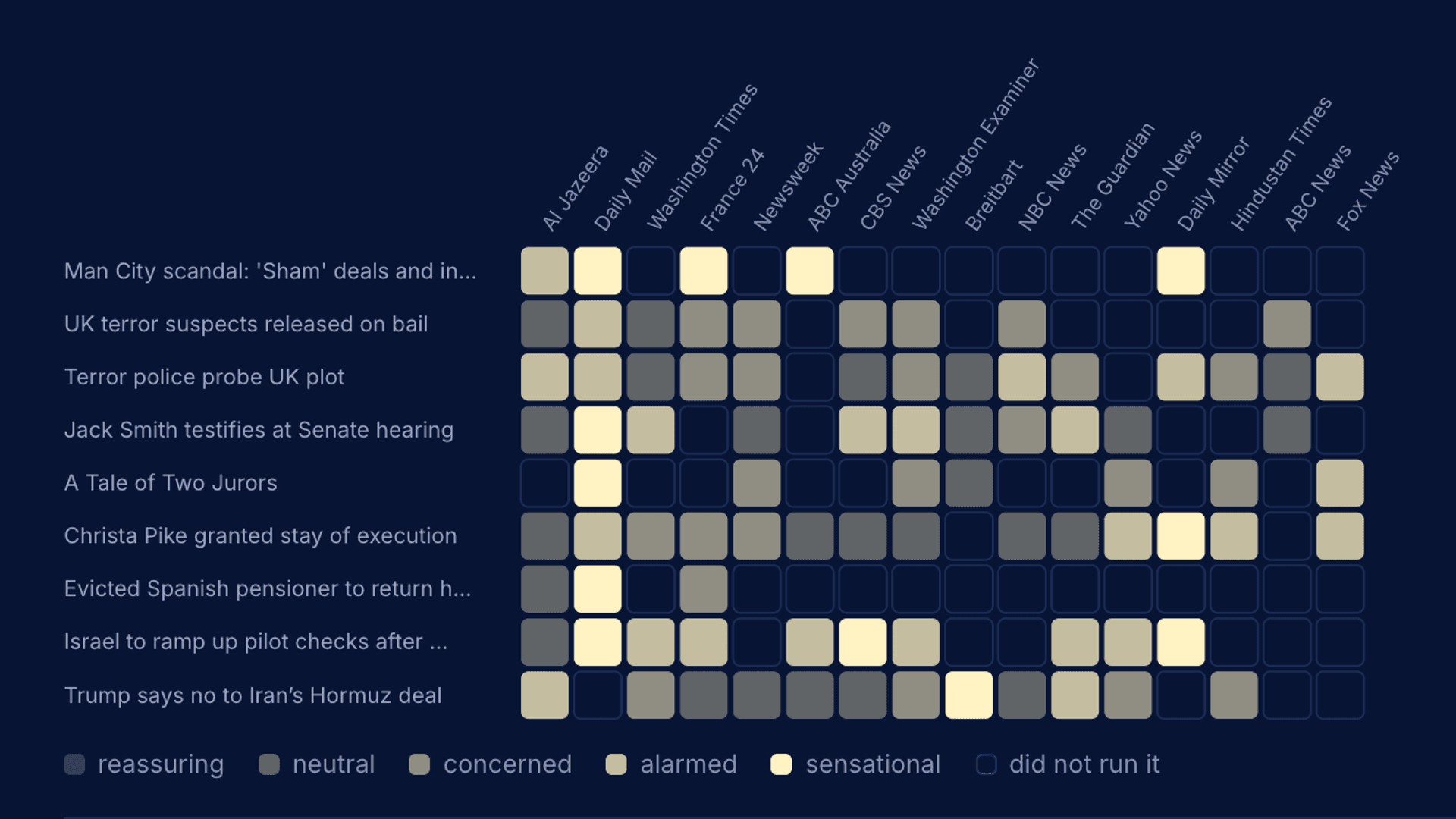
Everyone understands the power of data and its never-ending growth. Yet the amount of time we have to get the data we need stays the same. The "attention economy" is the result… and the most easily available data biases our decisions. The harder it is to gather and interpret data ourselves the more we allow third parties to control what we see. It is no secret that this leaves us open to manipulation. Consumers need to be put back in charge of their own destiny! But general data processing interfaces haven't changed much in decades (all hail SQL) and hoping a question-answering AI won’t hallucinate or be biased itself is asking for trouble – even if you can afford the tokens to process all the relevant data. So how can we reduce the months of work historically required to generate a new, reliable data product to minutes?
Clear Fracture was founded to remove the barriers between users and the right data. We believe AI agents are a huge part of the answer, allowing attention to be scaled through compute. Not enough hours in a day to research deeply? Task an agent to do that work on your behalf. Can't extract a needed insight fast enough from a mountain of data? Direct a swarm of agents to chew through the data at cloud scale to deliver the insight in moments. Worried your opinion or decision is biased? Have agents argue amongst themselves until they reach consensus from all the perspectives represented in available data. When you are in charge of your own AI army, it becomes your armor against manipulation and short-sightedness.
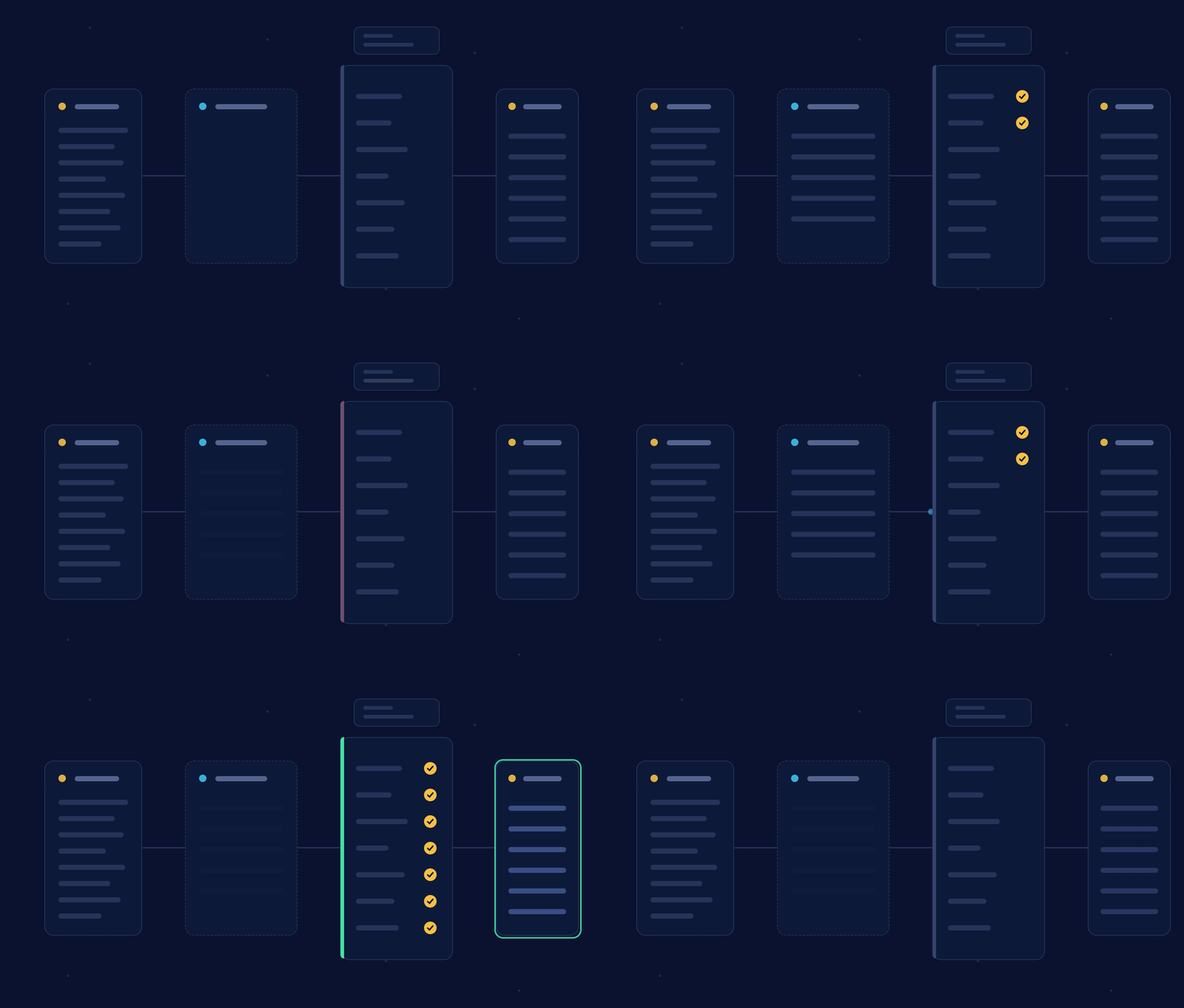
Belvedere, our “Distinguished Steward of Data,” is the command center for your AI army of data specialists. It is a data control plane which makes sense of and automates traditional data curation and engineering. We believe this is the right approach for two big reasons: (1) When data ops are agile enough to create a custom pipeline to answer on-demand questions in minutes, users are unshackled from waiting on specialists and long development cycles. (2) Pipelines running on traditional processing platforms are traceable, deterministic, affordable at scale, and already trusted by the enterprise. So instead of replacing your existing IT investments with unproven AI, Belvedere operates your tools on your behalf, making the most of your investments. You get the benefits of an AI army without the costs or risks of it being your only tool.
Working with Belvedere changes the very nature of data operations. You can begin focusing on “what” needs to be done and spending less time on “how” to do it. This is the same revolution that happened when the cloud arrived. Infrastructure-as-Code tools like HashiCorp’s Terraform now let you abstractly specify “what” compute resources you need, and the tool automates their provisioning, so you don’t have to be an expert on every/any cloud vendor. The power of thinking of the data products needed to answer your questions instead of the systems you need to interact with and how is liberating. Who cares how you get your "breakdown of revenue by region" or "list of events from all building sensors" (as examples) as long as you are confident it is accurate? Of course, engineers are well known for wanting to understand and supervise every line of code, so Belvedere still lets you review and edit at any level of granularity.
A declarative approach to data engineering has been desired for so long (UML/SysML was formalized 30 years ago), but required significant manual labor and specialization to create artifacts that more often than not were just documentation that was never in synch with the implementation it "governed." Now with Belvedere, data contracts are automatically derived from users describing their needs, and our agents reason through system models to align implementations. I would argue this declarative approach is critical for any automomy - until you can define the required output sufficiently, how can an agent test its results and iterate until it succeeds (or knows it can't)? Data operations can't be guesswork, so Belvedere harnesses contracts and system models for both tasking and validation.
Deploying Belvedere as the sense-making and control layer over your existing tools provides many benefits beyond agility for data ops:
Processing logic is maintained separate from its implementation, making understanding accessible to non-developers and product migrations painless
The reasoning and responsible party behind every setting and change is stored, so knowledge is not lost when staff turnover or time passes
Policies and regulations will be configured into processing even if users don’t know to ask
There are no shortage of places where this solution is needed. Clear Fracture's founding team believes deeply in America's ideals and for decades have been working to improve the efficiency and effectiveness of our government's protection and delivery of those values. So as we bring Belvedere to market this is where we are initially engaging, but we are eager to expand our team to engage more commercial market use cases.
Some of our favorite uses of Belvedere are broadly applicable. For instance, business analytics teams who constantly fuse new sources and prepare datamarts of slices can burn through backlog and stop trying to perfect the "one schema to rule them all." AI/ML test and evaluation efforts that struggle to setup endless variations on a theme for multi-step workflows being benchmarked can let their curiosity run wild and look in corners they wouldn't have time for before. Teams maintaining hundreds of old scripts running as cron jobs on dedicated machines can modernize and move to serverless processing with confidence. Even just automatically keeping a catalog of all an enterprise's data and its lineage populated and up to date is a dream come true for many organizations. Since data is so foundational, there are very few applications where Belvedere wouldn't help.
Belvedere is not just another chatbot. Its interface is built to visually make sense of data and operations. Its behaviors are tailored to guide users through data activities. You can come to Belvedere with a half-formed need and let him educate you while he guides to your answer, taking the heavy lifting off your plate. Our goal is to ensure that by being cared for by the Distinguished Steward of Data "we might just live the good life yet!"